Back to all

The short of it
- A dropship program lets you sell products your suppliers own and ship. Your assortment grows while your inventory investment stays flat.
- The decisions made before the first order, data standards, onboarding requirements, and SLAs, set your fulfillment rate for years.
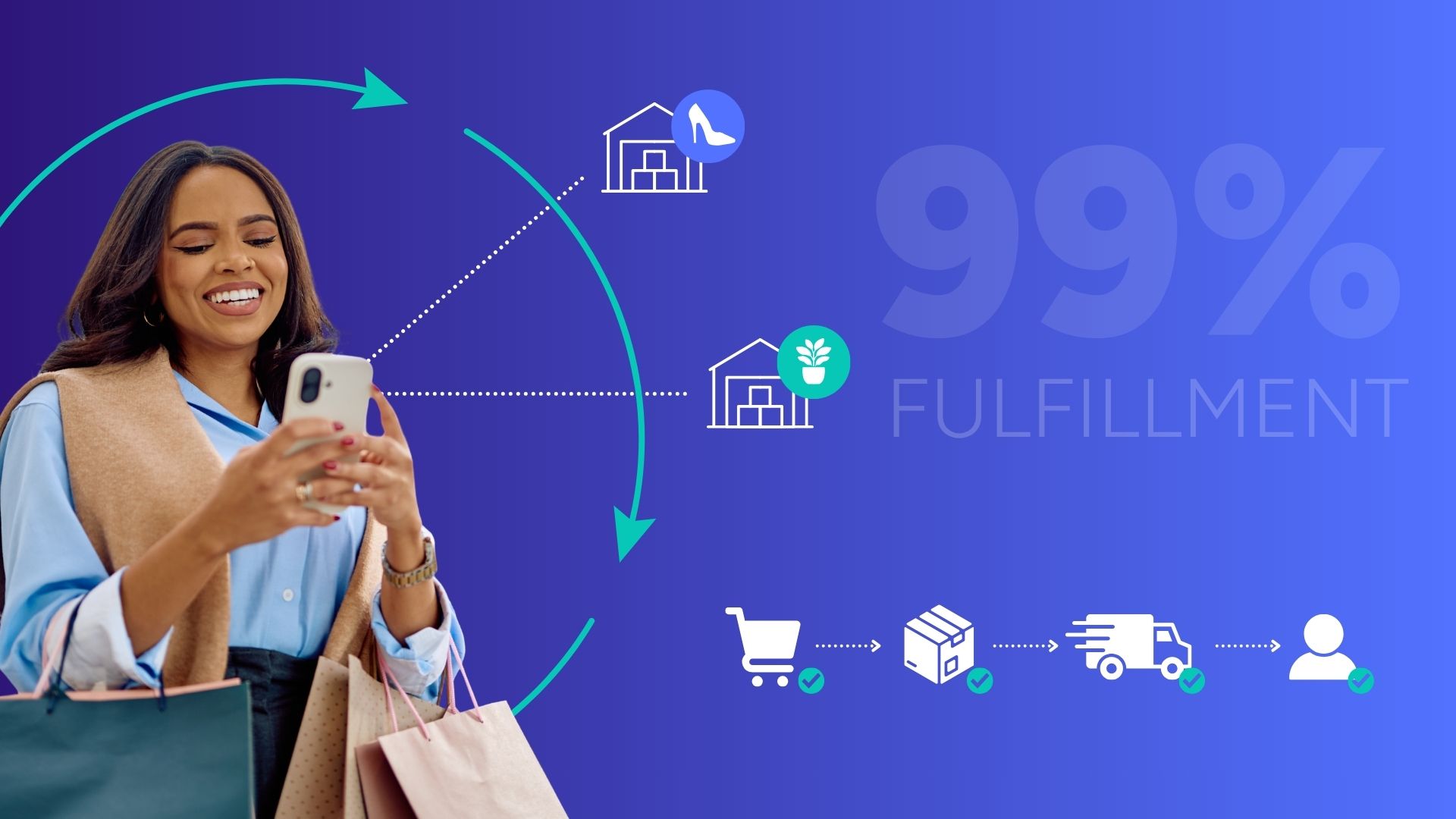
- Leading programs fulfill 99%+ of orders. Programs that miss the bar were usually designed loosely, not run poorly.
- Your suppliers also sell to your competitors. When stock tightens, the retailer with the freshest data wins the units.
Customers expect an assortment your balance sheet can’t carry. That gap is why retailers launch dropship programs. After more than 20 years in this industry, I can tell you where scaling programs separate from stalling ones: decisions made before anything goes live. Most month-six problems were created in week one. Here’s how to get week one right.
What is a dropship program?
A dropship program is a retail model where you list and sell products on your site, and the supplier who owns the inventory ships each order directly to your customer. You never purchase or warehouse the stock. You control the customer experience: pricing, merchandising, service, and the shipping promise.
This is different from consumer “dropshipping,” where individuals resell marketplace goods for arbitrage. A retail dropship program is a contractual operation between a retailer and vetted supplier partners, with negotiated pricing, data integrations, and service-level agreements on both sides.
Why launch a dropship program? Growth without the inventory bill
Expanding a category with owned inventory costs money before it earns any: open-to-buy budget, warehouse space, and markdown risk if the buy misses. A dropship program adds products, suppliers, and whole categories with no capital tied up in stock. Inventory risk stays with the supplier who already owns it.
That capital efficiency is why the best retailers treat dropship as a growth engine rather than a fulfillment workaround. It’s the fastest way to test new categories, extend aisles online, and meet demand you couldn’t justify buying into. Many pair it with a private marketplace as the program matures.
Four decisions that make or break a dropship launch
None of these require code. All of them require a decision, in writing, before the first order ships.
1. Set your inventory data standard first
Inventory data loses value the moment it goes stale. Stale data is the root cause of the oversell: a customer buys an item the supplier can’t actually fulfill. The risk compounds because your suppliers also fulfill for other retailers, often including your competitors and Amazon. When stock tightens, everyone is selling against the same units, and the freshest data wins them. Current data also works in the other direction, putting items back on sale the moment suppliers restock.
Nobody wants their buying journey to end with a cancellation email. Every one costs satisfaction, lifetime value, and often the customer’s next order.
I’ve said this for years: strong inventory visibility and management is the number one best practice of large-scale dropship programs. At launch, that means setting the standard suppliers must meet before they sell a single unit. How often inventory updates flow, in what format, and what happens automatically when a feed goes quiet. A supplier who can’t meet your data standard isn’t ready to be in your program, no matter how good the product is.
2. Put supplier onboarding requirements in writing
Your program’s quality ceiling is set by your least-prepared supplier. Before launch, document what joining requires: complete product data, packaging and shipping standards, integration method, and successful test orders before real ones. A defined onboarding path protects both sides. Suppliers know what good looks like, and you avoid discovering gaps through customer complaints.
Onboarding sets the data bar, but the relationship can’t stop at exchanging files. The strongest programs run on partnership as much as technology. Decide at launch how demand signals will flow: when a site-wide promotion is coming, suppliers who hear about it early can reposition inventory or expedite replenishment to cover the spike. A supplier who finds out from the order surge is a supplier set up to oversell.
Keep the first cohort small. A launch with a dozen well-integrated suppliers builds the muscle to onboard the next hundred quickly.
3. Decide who owns the customer when something goes wrong
In dropship, the supplier ships but the customer is yours. Ambiguity turns into cancellations and slow refunds. Before launch, put in writing who owns returns, customer service, cancellations, and the shipping promise shown at checkout, plus the response times that apply when something breaks. Escalation paths belong in the supplier agreement, not in a future retrospective.
No program is perfect, so build in the trip wires: inventory buffers, threshold-based blocking that suppresses new orders on a SKU the moment stock data looks wrong, and alerts that keep the first oversell from becoming the twentieth. When one does get through, speed decides the outcome. Identify the affected orders, tell the customer before they ask, and work with the supplier on an alternative path to fulfill.
Delivery expectations deserve their own line in the agreement, because the promise at checkout drives conversion and repeat purchase, and faster isn’t always the right promise.
4. Build the feedback loop before you need it
Every oversell has a root cause: an inventory inaccuracy, a delayed update, an operational error, a process breakdown. All of them leave clues. The best operators investigate each exception, find the pattern, and fix the process so it doesn’t repeat. Build that in from day one. Track oversells, late shipments, and cancellations by supplier, review the numbers on a set cadence, and tie continued participation to performance. This becomes your supplier scorecard, and it turns launch-phase incidents into program improvements instead of recurring costs. Continuous improvement is a team sport, and your suppliers are on the team.
What good looks like: the 99% fulfillment benchmark
When I started in dropship, a well-run program fulfilling 95% of direct-to-consumer orders was normal. Today, leading programs routinely exceed 99%. That improvement didn’t come from luck. It came from current inventory data, real supplier collaboration, fast exception response, and programs designed around those practices from the start.
If you’re building the business case, that’s the bar: more than 99 of every 100 orders shipped as promised, on an assortment you never had to buy. Hit it consistently and the dropship experience becomes indistinguishable from orders you fulfill yourself.
Where new dropship programs stall
- Accepting any inventory feed a supplier offers, then finding the update gaps through cancelled orders.
- Launching with too many suppliers before onboarding is proven, so every problem arrives at once.
- Leaving returns and service ownership undefined until the first dispute.
- Running the program as an experiment with no P&L owner, which guarantees it’s nobody’s priority.
How Rithum supports a dropship launch
Rithum has powered retail dropship for more than two decades, and more than 40,000 brands and retailers use the network today. Rithum’s dropship solution connects you to supplier partners through the integration methods they already use, with a structured supplier onboarding workflow, synchronized catalog and inventory data, and the buffers, blocking, and alerts that keep overselling risk down.
SupplyExplorer helps you find and validate the right suppliers before you onboard a single one, which is most of the launch battle. The infrastructure scales from 10 suppliers to 1,000, and retailers using Rithum’s delivery tools have saved 10% on shipping costs with no added headcount.
Talk to our teamFrequently asked questions
What’s the difference between a dropship program and dropshipping?
A dropship program is a retailer-run operation with contracted supplier partners, negotiated pricing, data integrations, and SLAs. Consumer dropshipping is an arbitrage model where individuals resell goods sourced from marketplaces. This guide covers the former.
Do retailers hold inventory in a dropship program?
No. The supplier owns and ships the inventory. The retailer owns the listing, the price, the customer relationship, and the service experience.
What fulfillment rate should a dropship program target?
Leading programs fulfill more than 99% of orders. New programs should design toward that benchmark from launch by setting inventory data standards and supplier SLAs upfront.
How does a retailer keep control of customer experience in dropship?
Through the program’s rules: onboarding requirements, packaging and shipping standards, SLAs with defined response times, and supplier scorecards tied to continued participation.
Nobody likes being oversold. Least of all by their favorite retailer.
Ready to launch? Talk to the Rithum team about your first supplier cohort.